conscious dying

The Death Tools Being Remembered

On psychedelics, dying, and wisdom that predates modern medicine.

When death becomes a true player and approaches our present day, in a very real way, it brings with it a spectacular kind of fear.  The fear of pain or the fear of what happens to the body is not the one on focus right now.  This fear is something more abstract and more difficult to place your finger directly on.  This fear is of dissolving, no longer being of a body with your consciousness, your face, and your idea of your place on this planet.  This fear takes a step beyond the edge of things familiar and places it into a space that can not be rehearsed or fully imagined. Some kind of trust is involved.
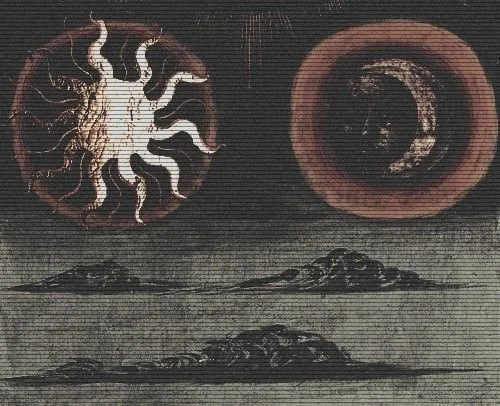
In the process of dying, this fear can move in waves as tumultuous as the ocean.  Sometimes it crests as sharp and immediate; other times it hums annoyingly in the backdrop of your life.  The fear shapes the emotional landscape of a human’s dying process.  Even for those who have lived full lives, even for those who feel prepared and ready, there is this deep, instinctual resistance to the unknown.

What if there was a way to meet that fear in a different way?  What if you did not have to erase or bypass its existence?  What if you were able to shift the relation with this fear, soften its grip with your present reality and open up space around the fear?  

Certainly, these are not new questions and observations.  They are very old ones that many humans have forgotten, and the answers have been stripped from many of us, replaced by fear.
The Long Memory

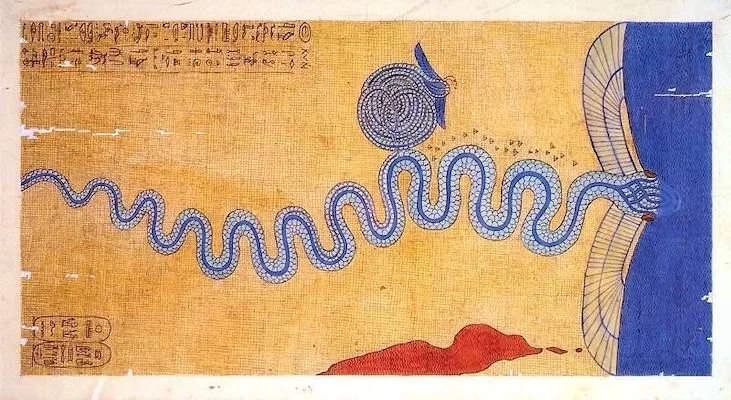
Ages before modern medicine began to define what is acceptable at the end of life, human beings across cultures had been working with powerful tools, plant medicines, to navigate the transitional threshold between life and death.

In the mountains of Oaxaca, Mexico, Mazatec healers have worked with psilocybin mushrooms for generations.  These were not casual substances.  They were held as sacred medicines, used in ceremony to heal, to receive guidance, and to move between worlds.  María Sabina, one of the most well known curanderas, described these mushrooms as a way of speaking with the divine.  They were a means of entering a state where the boundary between the living and the unseen becomes more permeable.  For those nearing death, or those accompanying the dying, these ceremonies offered a way to approach the passageways and crossings with reverence rather than fear.

In ancient Greece, there were initiates who traveled to participate in the Eleusinian Mysteries.  These mysteries were a ritual tradition that endured for nearly two thousand years.  Participants drank a ceremonial brew known as kykeon and underwent an experience often described as a symbolic death and rebirth.  Philosophers like Plato and Cicero wrote of these rites not as myth or superstition, but as profound encounters that transformed their understanding of mortality.  To be initiated was to lose the terror of death, not through belief, but through direct experience.

In the Amazon basin, Indigenous traditions have long used ayahuasca in ceremonial contexts to prepare individuals for death and to support communities in grieving.  These practices are relational, guided by skilled healers, and embedded within a broader cosmology that understands death not have to be an abrupt ending a transition within a larger web of existence.

Across continents and centuries, the pattern is clear as day. Human beings have repeatedly turned to these medicines at the edge of life. The medicines, ceremonies, and people were intentional and not reckless. They were held in community and not fringe practices in isolation. They were cultural, central, and woven into the fabric of understanding. For a very long time, this knowledge was carried forward with care.


What Was Lost, and Why?


The continuity of dying wisdom was disrupted in the mid-20th century.  In a relatively short span of time, substances that had been used ceremonially for generations were reclassified under emerging drug laws.  Psychedelics became associated with danger, instability, and a lack of medical value.  The research was halted, and these wise cultural practices were pushed to the margins.  The healers, elders, ceremonial guides and communities, the people who held this knowledge, were dismissed or silenced or colonized for profit.

This shift did not occur because these medicines had been thoroughly studied and found ineffective.  Of course not, the disregard was, in many ways, a broad and sweeping response shaped by political, social, and colonial forces of the time.  The result was a rupture.  A thread that had connected ancestral practices to the modern world was intentionally cut.  In the process, something meaningful was lost, for those seeking healing in life and for humans in relation with death.

The modern medical system continued to evolve in remarkable ways, extending life and managing physical symptoms with increasing sophistication.  Profits skyrocketed in exchange, insurance companies and greed consumed the treasured meanings and relations with stewards of the land.  Now, when it comes to the inner experience of dying with the psychological, emotional, and existential dimensions, so few tools remain.  The fears have not disappeared and the questions are still present.  What was once there to meet people with woven, ancestral practices are no longer accessible.

What the Research Is Remembering

In recent decades, a conversation has begun to reopen.  The profits and greed and insurance are still there.  Studies carefully designed at institutions like Johns Hopkins University and New York University continue to explore the use of psilocybin-assisted therapy for individuals facing life limiting and threatening illnesses.  The findings have been helpful for loosening the grip of stigma.

The participants in these studies have shown substantial and sustained reductions in death anxiety.  Many report an increased sense of meaning, a greater acceptance of mortality, and an improved quality of life in their remaining months.  For some, a single guided experience led to a shift that endured well beyond the session itself.  The fear is not eliminated or wiped off the map of our mind and body.  We are capable of recognizing and obtaining the ability to change its shape.  The way we perceive the fear by reducing its intensity, loosening its hold, and expanding its space for other emotional states to emerge.

Parallel research through organizations like MAPS have examined MDMA-assisted therapy for individuals with severe and treatment resistant PTSD.  While this work is not specific to end of life care, it has shown to be deeply relevant.  When there is unresolved trauma, this interrupted flow often intensifies distress at the end of life.  It makes it more difficult for individuals to find peace, comfort, and ease.   Sometimes, addressing trauma can significantly alter the emotional landscape of dying.

What these studies are seen to collectively suggest is that psilocybin and MDMA can facilitate experiences that are both psychologically meaningful and therapeutically beneficial.  The studies are rooted in structured, supportive settings.  For clinicians, this points to a growing body of credible research.  For individuals, communities, and families, it may offer options beyond simply enduring the fear.

What Does This Look Like?

Psychedelic-assisted end of life care, at its core, is relational work.  Many frameworks of best practices are being filtered into modern, western culture.  These ethical codes are unfinished unless they include the necessary and relevant highlights on cultural humility, diversity, community care, plus a multitude of other reverent groundworks.  Here, we take a look at three logistical steps for use with experiences into expanded or nonordinary states of consciousness.

Preparation begins with conversations about intention, fears and hopes, plus questions for what may come to pass.  These sessions are for identifying and building trust between the client and the companions, guides, guardians, or facilitators.  All participants use informed consent, boundaries, and ethical considerations while building a container where the experience can unfold safely with tenderness.

The day or night of the experience takes place in a balanced and supported environment.  The participants remain present; companions offer grounding, reassurance, and attunement as needs arrive in the present.  There can be music, art, movement, silence, and walking in frame.  The preparation sessions set up the environment to be of support for a relaxed and expanded process.  For many people, the experience envelopes a shift in perception, no matter how profound.

There may be an underlying sense of otherworldly interconnectedness.  This may figuratively or relatively dissolve the rigid boundary between self and world.  There may be subtle moments of insight, emotional release, or deep serenity.  These individuals describe encountering death not as an abrupt void, but as part of a larger continuity.  Others may find that the fear is no longer as overwhelming as it once was.  The priority and narrative of what was considered deep grooves of behavior, becomes more pliable for reflective softening.

An expected, specific outcome does not do well with psychedelic-assisted experiences.  The inner experience of dying is being tended to and the management of it is deeply personal.

Integration sessions begin just after a bit of rest and reset.  There is time to reflect, to make meaning, to carry whatever emerged into the remaining days or weeks of life too.  This step is as important as the experience itself.  Integration offers help by bringing any insights into a lived reality.  Death is not ever removed, it simply has a greater opportunity to be seen in a more integrative light.

Continuation of Thoughts

There is a growing recognition that end of life care has reached its own threshold and must extend beyond the physical.  There are essential, extra ordinary care providers working with pain management, symptom control, and medical intervention.  We are all growing in the same direction and a big part of the deathcare ecosystem.  The psychological and existential dimensions of dying are threads within humanity and all living things.  Ever more widely, humans are identifying the questions of meaning, connection, and fear.

There are plants, cultures, and communities that have been on our planet for a very long time.  There may be a possibility of remembering these medicines and actively listening within conversations with them.  Conversations around practice, research, land knowledge, ethical acceptance, plus consensual boundaries.  We do not need a replacement for modern medicine.  Death is a gigantic complement as an integral area of inclusion within the medical care system.  This addition expands the options for care at the crossways, passageways, and transitions of deathcare.

Humans across time have welcomed a way of being with the unknown and it remains unforgotten.
Important Disclaimer

This resource is intended for educational and professional development purposes only. It does not provide medical or legal advice. Practitioners are to always follow local laws, professional guidelines, and medical consultation when appropriate.

Created by Jennifer M Brown of Under the Root

Presence-based death doula goods and support services for individuals and loved ones navigating death, dying, grief, and transitional thresholds.
The Quietest Deaths Are Often the Most Prepared

I have now been present for many deaths. Some felt chaotic and full of scrambling, confusion, conflict over what the person may have wanted. Others felt spacious, intentional, with the humans and animals in the room knowing exactly what to do and were being just that. The difference between these two experiences was not luck or by accident. The reasoning underneath the calm serenity is not the illness, the timeline, or even the family dynamics. It is the keen awareness of preparation.

What Preparation Actually Looks Like at the Threshold

When someone has leaned into the groundwork for their death, you can feel the resonance in the room and in the softness on faces. There is less panic and second-guessing. Quite a bit less of questions around what do we do now?

Most of the questions have already been discovered, answered, and shared:
What does this person value and desire at their transitional threshold most?
What kind of care do they choose at this time?
Who is their trusted loved one to make decisions?
What will help them feel care and support?

The precious loved ones and community are not guessing with answers to these questions. They are following a treasure map that the most important participant created for them, and that preparation most often has changed every thing.

I supported a person who had spent quite a few months preparing for their death. Instructions, ideas, additions, and deletions were made nearly every year. They were not dying imminently. No, they truly were gracious and placed a heap of care into how they were meant to meet their transitional threshold.

They clarified their values. They spoke with their loved ones and their community members. They documented the wishes. They laid groundwork for their priorities and essentials. They imagined the details of environment that they desired. More recently, they stepped into the remaining weeks, and there was no scrambling nor chaos.

The community of loved ones had a firm grasp on what truly mattered to their person’s death. They understood that the choice was comfort over intervention. They were aware that their person wanted ambient music and nature sounds, shadowy lighting, the smell of fresh air, and their sibling’s hand in theirs. The community did not have to linger with questions above their heads. They did not have room to argue. They did not have to later entertain the wonder if they had made the right choices. They just had to be with each other and that is specifically what their person wanted.

The Cost of Remaining Elusive

On the flipside, I have also witnessed what happens when someone has not dug into preparation. The loved ones and community gather. Decisions need to be made and yet no one knows what their person wanted and wished for. One person blurted out, they will have wanted everything done. Another person stated, no, they will have not wanted to suffer like this. And just like that, suddenly the room was not about their person dying. It had become about the other’s conflict.

The person took their last breath. The community of loved ones were left with guilt, regret, and unanswered questions. Did we do the right things for them? Will they have wanted the dying process to look and feel like this? Why did we remain elusive with this topic? Why did we not have open conversations when we had the time?

This is some of the cost of avoidance and not just for the person dying but for the peoples left behind. I write these narratives not to impose guilt, to impress and embolden agency. The security of your wishes are protected and desired, if not only for yourself, for a community that is showing up for you as you have done so for them.

What People Wish They Had Known Earlier

There are some common themes that continue to show up from loved ones, communities, and family members after a death. They mention that they wish there had been more conversations about their wishes earlier, and they wish for more time. It is extremely rare that I hear that they are disappointed that there were conversations about their death priorities, values, essentials, and goals or that the conversations about their preferances made things worse.

I have named the preparation, death groundwork. When someone decides to have the groundwork done early, it is profoundly gentle and most of all offers clarity. It removes pressure instead of adding it to the mix. Because preparation done in crisis is brutal. It gives people all kinds of feels and is rushed. It hangs heavy in the air without breathing room. It often comes too late to make the choices you really want. Whereas, the people who prepare early and who have the awkward conversations, who clarify their values and who document their wishes. They do not regret it, not once.

The people who wait, do not carve out time, or do not feel a source of agency? They almost always wish they had started sooner.

The Relief That Comes with Preparation

A breadth for you to ponder a handful of things:
Preparation is not morbid, not pessimistic, not giving up or in. I believe death groundwork to be one of the most generous, life affirming things you can do for you and the community surrounding you, especially you. You are able to meet death with clarity, and even companionship, instead of the chaos. Your community is spared from impossible decisions and unnecessary guilt. Your preparation creates the conditions for presence instead of panic. That seems to be what the quietest deaths have in common.

The Invitation

If you are reading this and your ears begin to wiggle, a smile or something in you has begun a stirring, or if you find yourself thinking well this is interesting and I want to do that. And if you are listening to your body’s desire for grounding, I am here to help build a bridge with you.

You do not need a crisis to prepare. You do not need a diagnosis. You do not need anything other than the recognition that death is coming for all of us, and while it is one of the most natural thresholds for all living things, you will much rather meet it consciously and curiously. Take the time to create the conditions for you to be supported with your lightness of being. The quietest deaths are the most prepared ones.

Why Death Groundwork Gives Your Nervous System a Rest

Most people avoid death groundwork because they think it will make life feel more weighted and heavy. They imagine that thinking about their own death will create more fear, more anxiety, more dread. The opposite of those imaginings are actually true.

shadow art figure running away with human hand grasping

The Hidden Weight You are Carrying

There is a specific kind of tension most people carry without realizing it and it has been normalized, accepted, and lives rent free in the background of our lives. It is quiet and constant and barely noticeable until it has nearly disappeared completely. This weight shows up when death is mentioned casually or in passing. It makes itself known when a loved one gets sick or when you see an article about estate planning and immediately scroll past it.

You find that your body braces, your breath shortens, and your mind says not now and moves on. The avoidance of your death is not because you are weak or unprepared. You are avoiding it because you do not have a comfortable place to put the notion of death. Unfamiliar things that we have no language or structure for feel threatening even when the truth is that they will not harm you. The weight of being unprepared carries fear and is exhausting. Death is inevitable. Death groundwork is your lantern for the path.

red lantern sitting on tree stump in the forest

What Groundwork Actually Does

When you develop groundwork for death, you are not inviting death to come more quickly. You are carving out a space for your nervous system to have somewhere to land and be safe. Some of the phrases that support the space are:
I have thought about this.
I have some clarity.
I know what I do want.
I know what I do not want.
I have communicated it to the people I trust.

Your body will indeed register these phrases as safety. Death does not suddenly feel fine, the unknown becomes slightly less unknown. You have turned the scrambling into orientation and the bracing into breathing. I have been ever so grateful to have watched this shift happen over and over. Someone shows up with me carrying so many years of avoidance. Their shoulders are tight, their breath is shallow, their mind spinning with the knowing that preparation is something they are supposed to do but unclear as to where or how to begin.

We have a conversation that prompts its beginning. We clarify what matters most. We imagine the transitional threshold. We make a few key decisions. We document the essential. We have not solved all the things, but the weight of undone work has been lifted away.

small bird sitting on the edge of a pine branch

Groundwork as Relief, Not a Burden

Death groundwork is the relief valve for uncertainty. Not in a morbid now I am ready to die way, instead, in a now I can stop thinking about this and actually live way. Because once some groundwork is there to support you, you are no longer spending mental and emotional energy avoiding the inevitable. You are not carrying guilt about conversations you have not had the space to have. You are not worrying about leaving your loved ones with impossible decisions. You are not holding your breath every time death comes up.

You have done the groundwork and now you are free.

The Practical Benefits

Beyond the emotional relief, groundwork also offers practical benefits.
For you there is clarity about what you want, agency over your own transitional threshold, and a steadfast confidence that your wishes and desires will be honored. For your loved ones, the guessing is extinguished, conflict over what you may have wanted disappears, and any scrambling to make decisions in a crisis is averted. Your care community feels much less chaos or regrets and a whole heap of unnecessary suffering is dramatically reduced.

These are not small, insignificant things. They are the difference between a death that feels warm and comforting and one that feels chaotic or out of control.

You Do Not Need to Do Everything

Another gigantic misconception about death groundwork is that it has to be complete to be valuable. It does not. You do not need a 50-page document nor do you need every contingency mapped. There is no need for perfect certainty in every single decision.

Some of the few key decisions that remove the most common points of crisis:

  • Who you trust to make decisions if you are unable

  • What quality of life means to you

  • Whether you prioritize longevity or comfort

  • One person who knows where your documents are

Those few choices are some of the ones that matter most when death arrives. They are the difference between chaos and clarity, and they do not take months to figure out. They involve the willingness to embrace your decisions.

puzzle of burned book pages

The Freedom Waiting for You

If, by chance, you have been avoiding death groundwork because you think it will make your life feel heavier, I do want you to know that the weight you are carrying now, the weight of avoidance, is heavier than the work itself. Death groundwork is liberation. It is the gift of ground beneath you. The relief of knowing. The freedom of living without constant background fear.

You do deserve that.