Psychedelic-Assisted Safety and Ethics Checklist for Death Doulas

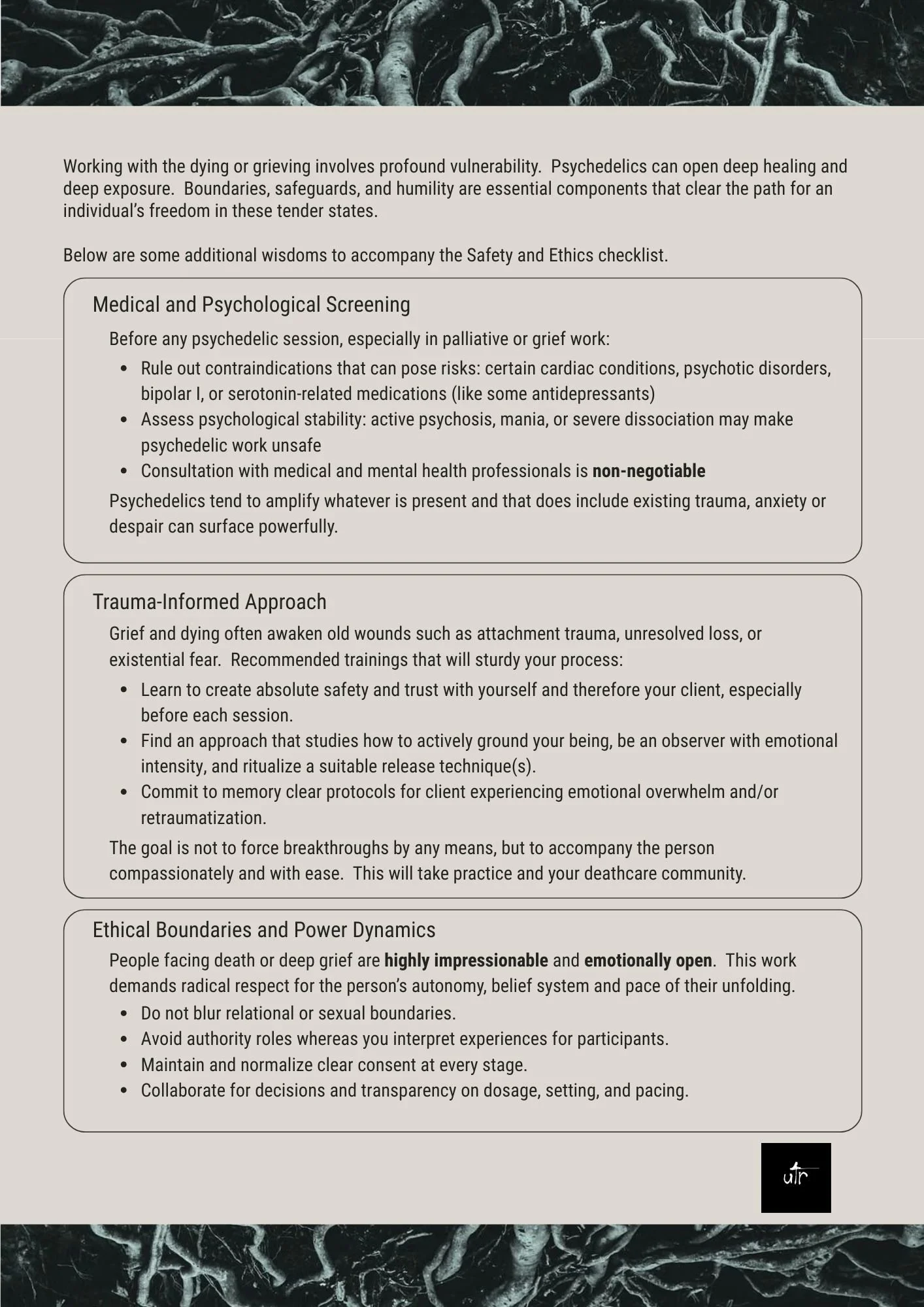
Psychedelic-Assisted Safety and Ethics Checklist for Death Doulas
A professional guide and checklist for safety and ethics with transitional threshold support.
Supporting individuals through death, dying, and profound grief requires exceptional care, cultural humility, and ethical clarity.
This downloadable safety and ethics checklist was created for death doulas and death care practitioners exploring or working alongside psychedelic-assisted care in palliative and grief contexts.
The guide brings together medical awareness, trauma-informed practice, and professional ethical boundaries into a clear framework designed to support responsible care.
Whether you are studying emerging psychedelic practices or strengthening your professional standards, this resource provides a grounded ethical compass for navigating these sensitive and tender spaces.
What This Guide Supports
Psychedelic experiences can bring profound insight, but they also amplify emotional vulnerability, making preparation and ethical safeguards essential. This checklist helps death doulas and the death care ecosystem:
Create safe and supportive environments for psychedelic experiences
Maintain strong ethical boundaries and informed consent with clients
Coordinate with medical, hospice, and mental health professionals
Implement trauma-informed approaches to grief and dying
Prepare clients thoughtfully before experiences
Provide meaningful integration and follow-up care
What Is Included in the Checklist
This guide covers key pillars of safe practice:
Legal and Institutional Alignment - Understanding professional responsibility and local policy considerations.
Medical and Psychological Screening - Reviewing medical history, medications, and mental health stability.
Consent and Preparation - Establishing informed consent and conducting preparation sessions with clients.
Trauma-Informed Care - Supporting clients with compassion while preventing retraumatization.
Safe Set, Setting and Staffing - Creating a calm environment with appropriate support and monitoring.
Ethical Boundaries - Maintaining professionalism and protecting client autonomy.
Integration and Follow-Up - Supporting reflection and meaning-making after the experience.
Documentation and Ethical Review - Keeping records and engaging in professional debriefing when appropriate.
Who This Is For
This guide was created and designed for:
Death doulas
Death midwives and deathwalkers
Psychedelic integration coaches
Grief professionals
Hospice-adjacent caregivers
Spiritual care providers
It is particularly valuable for professionals seeking ethical grounding in our emerging psychedelic-informed care models.
What You Will Receive
3-page digital PDF ready for download and print
Structured Safety and Ethics Checklist
Clear professional reference for practice
Use it as a personal study resource, professional reference, or team discussion tool.
Why Ethical Frameworks Matter
Working with people who are dying or grieving involves profound emotional openness and vulnerability. Psychedelic experiences may bring healing, insight, and peace, however, they can also uncover deep trauma or existential fear. Ethical preparation, cultural humility, and clear professional boundaries help ensure that these experiences remain supportive rather than harmful.
This checklist helps practitioners stay rooted in compassion, safety, and respect for each individual’s unique journey.
Important Disclaimer
This resource is intended for educational and professional development purposes only. It does not provide medical or legal advice. Practitioners are to always follow local laws, professional guidelines, and medical consultation when appropriate.
Created by Jennifer M Brown of Under the Root
Presence-based death doula goods and support services for individuals and loved ones navigating death, dying, grief, and transitional thresholds.