There is a reason most death conversations feel unbearable. It may not be the topic itself, rather it is most likely the language we use to approach it.
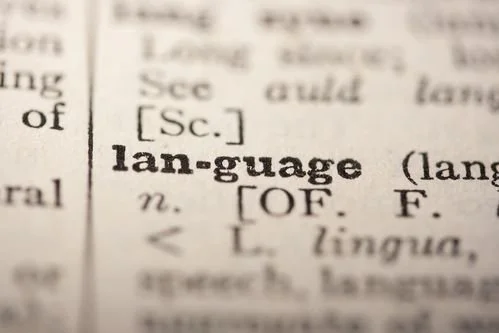
lan·guage
/ˈlaNGɡwij/
noun: language; plural noun: languages
the principal method of human communication, consisting of words used in a structured and conventional way, conveyed by speech, writing, or gesture.
The words like "terminal." "end-stage." "life-limiting." "final arrangements.", these are NOT neutral terms; these are words loaded up with finality, fear, and medical distance. When your nervous system hears them, it buckles into the chair and braces. This is not because we are unprepared or weak. It has been proven that language shapes experience, often before the conscious mind even arrives with the actual words.
The language and words that are used here go through a creative and tenderness filter of my mind first. As a poet at the helm with Under The Root, my personal language prepares the nervous system before my mind understands and allows them to be used across the forest floor of everywhere else.
Why Language Matters in Death Work
Does your body respond to language faster than your mind can process it?
When someone says “it is time to get your affairs in order”, your nervous system may hear a sense of urgency, a threat is in the room, something is wrong.
When someone says "let us share some ideas of how YOU want to be cared for", your nervous system hears an invitation, possibilities, agency.
This is the same conversation, wildly different outcome.
I do work diligently and honestly with words. This is not because I am busy working hard at being precious or poetic for its own sake. It seems to me that understanding the language I use either creates a sturdy, tender ground or it outright deletes it. In death work, it is clear as the night sky that a connected and woven ground is precisely the mighty foundation suited for the many things that it will support.

The Difference Between Clinical Language and Human Language
I have noticed that most death education uses clinical language like advance directives, living wills, healthcare proxies, and DNR orders. These terms are necessary for legal and medical contexts. However, they are not where you begin when working with someone who is afraid. This clinical language is actively creating a wide valley between human and death. Language has been turning death into a bureaucratic process for so long that we are indoctrinated to the fear instead of welcoming our naturally gracious threshold.
The use of more human language may invoke the opposite of fear. Instead of advance directive, we exchange it for clarifying what matters most to you. Instead of end of life planning, it seems most fitting to say, preparing for the meeting with your transitional threshold. Instead of patient wishes, I suggest the use of what you want. These are not just my semantic choices. They are nervous system choices with creative thinking, tenderness, and unique imagination at the core. One set of words makes the body contract like a slinky. The other helps it be at ease and soften.
How Language Creates Safety
When I work with someone, the nuance to their body is in my view. The noticing when their shoulders rise, when their breath shortens, or when their eyes glaze over matters. Because they may have left the conversation and gone into a protection mode. These are my cues to change the language and step back. Not to simplify the words, but to make it more human, more spacious, more true to what we are actually talking about.
If the person’s nervous system is in a threat response, they are unable to integrate the information. They are having a tough time making clear decisions because they are blocked from the access of their own knowing. They are probably just working out how to survive our conversation. So, when the language feels safe and secure, it creates oodles of space instead of forced pressure. An invitation has just been created instead of urgency. The body relaxes and breathes in the surrounding air.
This is when real preparation becomes possible.
The Language of Under The Root
Under The Root, we are building a sanctuary for the language about death to be ultra supportive and kind, full of possibilities.
We will not use fear or urgency as the motivators. We do not rush. We do not impose or frighten.
We use words like:
Threshold instead of "end".
Because death is a bridge or crossing, not a conclusion or the goal.
Authorship instead of "control".
Because, silly humans, although we can not control death, you CAN participate in shaping the experience of it.
Ground instead of "plan".
Because what people need most is not that perfect and precise roadmap. Humans desire a sense of steadiness.
Witness instead of "expert".
Because death work is not at all about me having the answers. It is ultimately about creating ample space for you to find yours.
Tenderness instead of "compassion".
Because tenderness implies action, care, and attunement. It is not just a feeling.
This is not our branding language. This is our use of philosophical precision. These words do not seem to be interchangeable with their clinical counterparts. They create entirely different nervous system experiences. The unique difference matters immensely.

What This Means for You
If you have ever left a death conversation feeling more overwhelmed than when you started, it was not your fault. It was the language. If you have ever felt rushed, pressured, or like death was being presented as an emergency that you are behind on… that was the language too. At Under The Root, we are diligently approaching death as something that can be met gently and with confidence. This is not because death itself is gentle. We believe it is because the language we use to approach it can be.
So, when the language is right, when it creates safety instead of threat or orientation instead of panic, the very thing that is frightening changes shape. Your body will stop bracing and spinning endlessly. The breath then has the opening to deepen right down to the very core of you. Without a doubt, the preparation begins to not feel like something you have to force yourself through. It feels like something your nervous system has been waiting for.

Why This Approach Is Different
Most death work does prioritize information over integration. I will say that again, most of the death work prioritizes all the damn information over the integration. It assumes that if you just have the right facts, the right documents, the right legal structures, you will be prepared and be ok. I do not believe that the human preparation works exactly in that way. You can have all the paperwork in the world and still feel unprepared if your nervous system has not had the chance to orient to what is on its way.
This is why language is coming first at Under The Root. Before the documents, before the decisions, and definitely before the logistics. We will begin with words that help your body recognize: This is something I can meet. This is something I am allowed to shape. This is something that can be held so very close to my person. That is the ground everything else is built on.
The Invitation
If the language in this piece feels different to you or if something in your body softened and lit up while reading it, that is the intended meaning of this information. It may well be your nervous system recognizing that this is the kind of support you align with.
The language that rushes or pressures is overreaching. The language that treats you like a problem to solve bypasses humanity first. On the other hand, the language that creates and expands your space is breathing. I want language that honors your pace. I want to lead with the kind of words and feelings that treat death as a threshold you are allowed to approach consciously and with all the awareness you can muster.
That is what Under The Root offers and if you are ready for that kind of preparation, I am here, weaving words to support and steady the threshold for you.